Top Tips for Choosing the Best 4G Security Camera?
In recent years, the adoption of 4G security cameras has surged, driven by the increasing demand for reliable surveillance solutions. According to a recent industry report by MarketsandMarkets, the global security cameras market is expected to reach $45 billion by 2025, with 4G technologies gaining a substantial share. This trend reflects a growing recognition of the need for flexible and efficient monitoring systems.
4G security cameras offer numerous benefits, especially in areas lacking stable Wi-Fi connectivity. They provide real-time video streaming and remote access, empowering users to keep an eye on their properties from anywhere. However, not all 4G cameras are created equal. Potential buyers often struggle to discern which model suits their needs best. It is crucial to weigh the features, durability, and cost-effectiveness of various options.
Selecting the right 4G security camera can be daunting. Users frequently overlook important specifications, leading to suboptimal choices. Understanding the technology, resolution, and battery life is essential. By doing thorough research, individuals can avoid pitfalls and ensure they invest in a camera that enhances their security measures effectively.

Understanding the Basics of 4G Security Cameras
When considering 4G security cameras, understanding their core functionality is essential. 4G cameras are designed to operate independently of Wi-Fi networks. This makes them suitable for remote locations. According to industry reports, these cameras can provide constant surveillance without requiring an internet connection. This flexibility is a significant advantage in areas where Wi-Fi is unreliable.
These devices rely on cellular networks for data transmission. With the global increase in 4G coverage, users can expect better connectivity. In fact, a report from the GSMA indicates that by 2025, over 90% of the world's population will have access to 4G networks. This fact supports the growing reliance on 4G security cameras for both home and business security.
While 4G cameras offer many benefits, potential users should reflect on some limitations. Battery life can vary significantly among different models. Some cameras may only last a few days without needing a recharge. Consequently, it's essential to consider the specific monitoring needs before making a purchase. Overall, understanding how these cameras function helps users make informed decisions.
Key Features to Consider When Selecting a 4G Security Camera
Choosing the right 4G security camera requires careful consideration of several key features. Video quality is crucial. Look for cameras that offer at least 1080p resolution. This ensures clear images, helping you recognize faces and details. Stability in varying light conditions is important too. Many cameras come with night vision capabilities, which can enhance security during the dark hours.
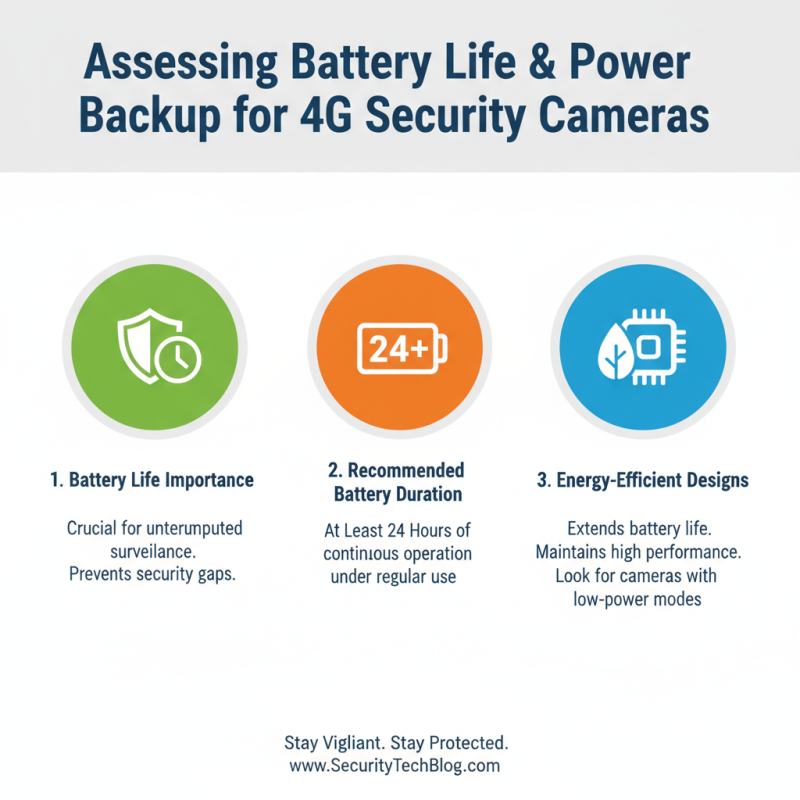
Another essential aspect is battery life. Opt for models that can last several days on a single charge. This feature is particularly useful in remote locations. Additionally, evaluate the ease of installation. Some cameras require professional setup, while others are designed for DIY enthusiasts. Check if the camera has user-friendly apps for real-time monitoring.
Connectivity options should not be overlooked. Ensure the camera has a reliable 4G network connection. A stable signal maintains video feeds without interruptions. Finally, consider motion detection features. Cameras with customizable alerts help you stay informed of unusual activities. While many options exist, always weigh these features and think about how they fit your specific needs.
Top Tips for Choosing the Best 4G Security Camera
| Feature |
Description |
Importance |
| Resolution |
Higher resolution provides clearer images and videos, essential for identifying faces and details. |
Critical |
| Night Vision |
Enables the camera to capture clear images in low-light conditions. |
Very Important |
| Battery Life |
Longer battery life ensures continuous operation without frequent recharging. |
Essential |
| Cloud Storage |
Allows stored footage to be accessed remotely and protects against loss. |
Important |
| Motion Detection |
Detects movement and sends alerts to the user, enhancing security monitoring. |
Critical |
| Two-Way Audio |
Enables communication through the camera, allowing interaction in real-time. |
Useful |
| Weatherproofing |
Ensures the camera can withstand outdoor conditions, including rain and snow. |
Necessary |
Evaluating Video Quality and Storage Options
When selecting a 4G security camera, video quality and storage options are crucial. A high-definition resolution, ideally 1080p or higher, ensures clear imagery. According to a recent report by IHS Markit, cameras with 4MP and 8MP resolutions are gaining traction. These advanced options provide greater detail than standard HD cameras.
Tips to enhance your choice: Evaluate the field of view. Wider coverage reduces blind spots. Look for cameras with at least a 140-degree angle. Also, consider low-light performance. Many modern cameras utilize infrared technology for night vision. Up to 70% of security incidents occur after dark, making this feature essential.
Storage solutions are another critical factor. Many cameras offer local storage options via SD cards and cloud storage solutions. Reports indicate that cloud storage is increasingly preferred due to its accessibility. However, data security and costs can vary. It is essential to analyze whether monthly fees align with your budget. Choosing a camera that allows you to customize storage settings can also provide greater flexibility.
Comparing Costs and Warranty Options for Long-Term Use
When selecting a 4G security camera, costs and warranty options significantly affect long-term satisfaction. Many consumers assume a higher price guarantees better quality. However, the relationship isn’t always straightforward. Some budget-friendly options deliver impressive features, while higher-end cameras might lack essential functionalities. It’s essential to assess what your investment truly covers.
Warranty details are equally crucial. A longer warranty often suggests manufacturer confidence in the product. Take time to review what the warranty entails. Does it cover accidental damage? And what about technical support? Faulty equipment can be a hassle. A reliable warranty alleviates some concerns. Remember, an appealing warranty isn't just a marketing tool; it reflects on the brand's commitment to reliability.
While researching, consider the total cost of ownership, including installation and maintenance. Often, overlooked costs can impact your budget. A cheap camera might necessitate frequent replacements. Reflect on these factors before making a decision. Aim for a balance between initial costs and long-term value. Investing time in research can lead to a more satisfying choice.
Cost Comparison and Warranty Options for 4G Security Cameras