Top 10 Surveillance Camera Features Buyers Need to Know?
In today's world, the importance of Surveillance Cameras cannot be overstated. According to a recent report by MarketsandMarkets, the global surveillance camera market is expected to reach $62.6 billion by 2024, reflecting its growing relevance in security and monitoring. As we explore the essential features buyers must consider, we should acknowledge the expert insights from Dr. James Harland, a renowned specialist in the security technology field. He remarks, "Understanding key features is crucial to making informed decisions in surveillance technology."
Potential buyers often overlook critical details when choosing Surveillance Cameras. Factors like resolution, night vision capability, and storage options are paramount but can be quite confusing. As technology advances, features are becoming more complex, leaving many consumers uncertain about what truly matters. It's vital to ask questions and conduct research to ensure the right choices.
With rapid advancements in the sector, decisions must be made carefully. Buyers might find themselves overwhelmed by the plethora of options available. This complexity can lead to dissatisfaction if the selected camera does not meet specific needs. Understanding crucial features is not just beneficial; it's essential for effective security solutions.
Key Specifications to Look for in Surveillance Cameras
When choosing a surveillance camera, key specifications can significantly impact performance.
Resolution is crucial. Higher resolution means clearer images. Look for cameras with at least 1080p HD. This provides adequate detail for identifying faces and license plates.
Night vision is another vital feature. Cameras equipped with infrared technology can capture clear footage in low light, enhancing security during nighttime.
Field of view matters too. A wider angle allows for more coverage. Ideally, select cameras with at least a 90-degree field of view. This reduces blind spots in the monitored area. Storage options are essential as well. Some cameras offer cloud storage, while others use local options. Assess your needs carefully. Lastly, check for two-way audio capabilities. This feature enables communication through the camera, making it a versatile security tool.
These specifications may seem overwhelming. It's easy to overlook certain features. Each choice impacts how effectively a surveillance system operates. Take time to evaluate the unique requirements for your space. Understanding these essentials aids in making an informed decision. Choosing the right camera could be more complex than anticipated. Reflecting on this can lead to better outcomes.
Understanding Resolution: The Impact of 1080p vs. 4K
When considering security cameras, resolution is crucial. Buyers often face the dilemma of choosing between 1080p and 4K. According to industry reports, 1080p offers a resolution of 1920 x 1080 pixels. This level is adequate for most home security needs.
On the other hand, 4K resolution, which provides 3840 x 2160 pixels, delivers sharp, detailed images. This higher clarity can be invaluable when identifying faces or license plates. Research indicates that about 85% of consumers prefer 4K for its quality, especially in large commercial applications.
However, 4K cameras require more storage and bandwidth. Many users underestimate the storage needs. On average, a 4K camera consumes roughly 2-3 times more bandwidth than a 1080p camera. Potential buyers must weigh the benefits of enhanced clarity against the added costs. Each situation is unique, and there’s no one-size-fits-all resolution choice.
The Importance of Night Vision Capabilities in Security Cameras
Night vision capabilities are crucial for security cameras. They enhance monitoring in low-light situations. Without this feature, a camera may miss vital details at night. Many potential intrusions happen after dark, making it necessary for cameras to be effective in these conditions.
There are different types of night vision technologies. Infrared (IR) is common in many cameras. It uses invisible light to capture clear images in darkness. However, IR may not always provide the highest resolution. Some cameras offer color night vision, which can give a more detailed view. Yet, this can be affected by ambient light levels. Users must weigh the benefits against their specific needs.
The effectiveness of night vision varies by model. Some users may find that cheaper cameras do not perform well at night. Others may invest in high-quality models without fully understanding their capabilities. It’s essential to research and understand these options. This ensures that your surveillance system meets your security requirements, especially during nighttime hours.
Evaluating Motion Detection Technology: Passive vs. Active Sensors
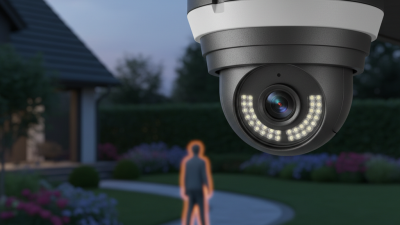
When choosing a surveillance camera, understanding the motion detection technology is crucial. There are two primary types: passive sensors and active sensors. Passive sensors detect changes in heat, such as a person moving in the frame. This method is energy-efficient and minimizes false alarms from non-living objects. However, it may miss quick movements in some situations.
Active sensors, on the other hand, use electromagnetic waves to sense motion. They create a "trip wire" effect, alerting the camera when someone crosses a certain line. This technology tends to be more accurate but can trigger false alerts from animals or moving plants. Each type carries its own pros and cons. The choice often leads back to the specific needs and environment of the surveillance area.
Buyers should critically evaluate their environments. In an open area, active sensors may provide better coverage. Yet, in quiet, residential zones, passive sensors might suffice. While some users prefer high-tech options, the simplicity of passive sensors is sometimes overlooked. It's essential to reflect on these details to make an informed decision.
Top 10 Surveillance Camera Features Buyers Need to Know
| Feature |
Description |
Passive Sensors |
Active Sensors |
| Resolution |
Quality of the captured image |
Good in well-lit areas |
Excellent in varying light conditions |
| Field of View |
The extent of the observable area |
Narrow coverage |
Wide coverage |
| Night Vision |
Visibility in low-light conditions |
Basic illumination |
Advanced infrared capability |
| Motion Detection |
Detection of movement in the frame |
Detects changes in heat |
Detects changes in pixel values |
| Storage Options |
How recordings are saved |
Local storage |
Cloud options available |
| Weather Resistance |
Durability against elements |
Basic weatherproofing |
High IP rating for harsh environments |
| Audio Capability |
Ability to capture sound |
Usually none |
Two-way audio possible |
| Integration with Smart Systems |
Compatibility with other technology |
Limited smart home integration |
Full compatibility with smart systems |
| User Interface |
Ease of accessing features |
Basic setup |
Intuitive, user-friendly |
Integration with Smart Home Systems and Cloud Storage Options
Smart home integration is revolutionizing surveillance camera technology. Research indicates that about 70% of new security cameras now support smart home ecosystems. This advancement allows users to connect devices seamlessly. For instance, a camera can trigger an alarm, or turn on the lights when it detects motion. Such features enhance security by automating responses to potential threats.
Cloud storage options are also gaining traction. According to a report, 64% of consumers prioritize cloud capabilities when purchasing cameras. This allows for remote access to footage. It also ensures that recordings are safe from theft or damage. However, reliance on cloud services raises concerns about data privacy. Users must choose reliable providers who prioritize encryption and security.
While many cameras boast these features, not all perform equally well. Some models may have slow upload speeds, leading to gaps in security coverage. It’s essential to research the camera’s specifications carefully. Evaluating user reviews can provide insights into real-life performance. The swift advancement of these technologies means features can differ widely among options.